

SMSF Limited Recourse Borrowing Arrangements: What Changed in 2026?


ATO’s 2026 Hitlist for Individuals: How to Avoid an Audit
|
|
August 6, 2026 |
Most Australians want to stay compliant at tax time, but bad advice—especially from social media “influencers”—is landing more taxpayers under scrutiny than ever. Armed with advanced AI, real-time data-matching, and expanded budget funding, the ATO is aggressively targeting individual taxpayers and property investors for the 2026 financial year. Based on our recent audit experience, here are the key focus areas on the ATO’s 2026 hitlist and the practical steps you need to take to protect your return.
From our own audit experience, there’s a clear pattern to the areas the ATO is targeting for the 2026 financial year. In this article, we’ll break down those key focus areas, incorporate the latest 2026 rule updates, and share practical steps you can take to reduce your audit risk.
Non-Lodgement and Late Lodgement
Failing to lodge your 2026 tax return on time—or skipping lodgement entirely—is the fastest way to trigger an ATO review. Thanks to expanded real-time pre-fill data, the ATO already receives direct reporting on your income from employers, banks, share registries, crypto exchanges, and gig economy platforms before you even begin.
If you prepare your own return, the usual lodgement deadline is 31 October. Different deadlines may apply if you use a registered tax agent. If a return remains overdue, the ATO may impose penalties and can eventually issue a default assessment using the information available to it. A default assessment may not include deductions the ATO does not know about. Staying on top of your lodgement obligations is the simplest way to avoid possible Failure to Lodge (FTL) penalties and unwanted audit scrutiny.
Claiming a Large Tax Deduction — ATO Benchmarks and AI Triggers
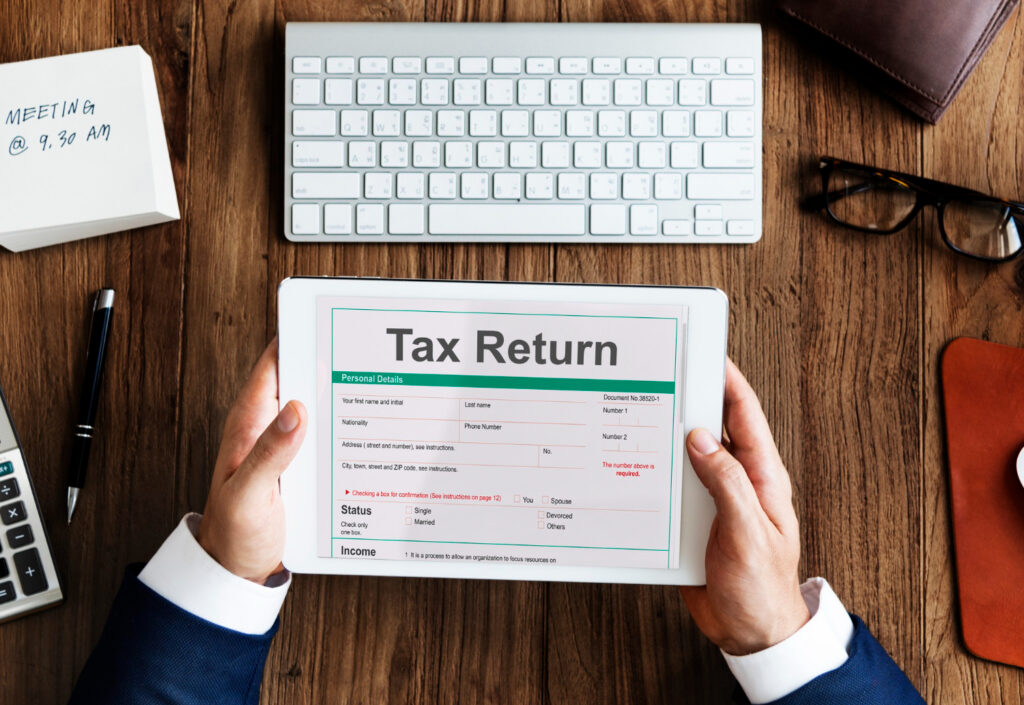
The ATO uses information from tax returns and other sources to identify claims that appear unusual. A claim that is higher than claims made by people in similar circumstances may attract attention, but that does not mean the deduction is incorrect. The important thing is being able to explain the claim and provide appropriate records.
Claiming a large deduction isn’t an issue if your claim satisfies the ATO’s 3 Golden Rules:
- Out-of-Pocket Expense: You spent the money yourself and were not reimbursed by your employer.
- Direct Connection: The expense directly relates to earning your assessable income.
- Written Proof: You hold valid receipts, tax invoices, or bank records proving the transaction.
If you are unsure whether a large expense meets the ATO’s strict deduction criteria, consult a registered tax agent before lodging your return.
Claiming Travel Expenses — ATO Rules and Real Audit Cases
Travel expenses remain a primary audit trigger, particularly where the ATO suspects private travel is being disguised as a work expense. The fundamental rule hasn’t changed: daily trips between your home and your regular workplace are private and non-deductible.
Real Case Study: CBRX and Commissioner of Taxation
- The Claim: An engineer for an oil and gas producer claimed nearly $31,000 in accommodation, meals, and incidental costs incurred in Perth, Darwin, and Broome between offshore shifts.
- The ART Ruling: The Administrative Review Tribunal (ART) denied the travel claims, ruling that because his permanent workplace was the offshore facility, any travel to reach it was preliminary to his duties.
- Key Takeaway: Receiving a travel allowance does not automatically make expenses deductible. Only claim travel directly connected to performing your duties (e.g., travelling between two different work sites on the same day).
Claiming Motor Vehicle Expenses — 2026 Limits and Logbooks
Motor vehicle claims remain second only to rental properties as the most heavily audited deduction category.
- Car Depreciation Limit: For the 2025–26 income year, the car limit remains $69,674. Where the limit applies, depreciation is calculated using no more than this amount, even if the car cost more.
- Cents-per-Kilometre Rate: The ATO claim rate for the 2026 financial year remains set at 88 cents per kilometre, up to the maximum capped limit of 5,000 business kilometres per vehicle.
- Logbook Requirements: If you use the logbook method to claim a higher percentage or actual costs, you must maintain an ATO-compliant 12-consecutive-week logbook establishing your business-use percentage, supported by written evidence for fuel and maintenance. It is valid for five years.
Real Case Study: Dual-Role Work-from-Home & Studio Travel (Hall & Commissioner of Taxation)
- The Claim: A sports presenter claimed motor vehicle expenses for travel between his home office and the broadcast studio.
- The 2025 ART Ruling: In May 2025, the Administrative Review Tribunal (ART) allowed the claim, finding that his employment involved two distinct roles: a Digital Role performed from his home office and a Live Role performed at the studio.
- 2026 Full Federal Court Update: The Commissioner appealed the ART decision. In April 2026, the Full Federal Court unanimously overturned the decision, finding that the travel between the presenter’s home and the studio was not deductible. Although he performed employment duties from home, those duties had ceased before he travelled to the studio and his studio duties did not commence until he arrived.
- Key Takeaway: The 2026 Full Federal Court decision changes the outcome of the earlier ART case. Simply working from home does not make subsequent travel to your regular workplace tax-deductible. The travel itself must be undertaken in the course of performing your employment duties rather than simply getting you to a place where those duties will be performed.
Work From Home (WFH) Claims — Strict 2026 Compliance
The ATO continues to crack down on generic, estimated work-from-home claims. To satisfy an audit, you must demonstrate a direct connection between your remote work setup and additional out-of-pocket running expenses.
Method 1: Fixed Rate Method (70 Cents Per Hour)
- Strict Full-Year Time Tracking: You must maintain a record (timesheet, roster, or log app) of every single hour worked from home. The ATO strictly rejects end-of-year estimates or 4-week sample journals for this method.
- Expenses Covered: The 70c rate covers electricity, gas, mobile/home phone usage, internet, stationery, and computer consumables. You cannot claim these items separately.
- Evidence Required: You must keep at least one bill for every expense category covered by the rate (e.g., one electricity bill and one phone bill) to prove you incurred the cost.
- Separate Claims Allowed: You can still claim a separate deduction for the decline in value (depreciation) of work equipment like computers, monitors, and ergonomic office chairs.
Method 2: Actual Cost Method
- Requires a continuous 4-week representative log establishing your regular work usage pattern, combined with actual bills and receipts for the full year to calculate running expenses.
Occupancy Expenses Warning Rent, mortgage interest, and council rates are generally non-deductible for employees. Claiming them requires your home to qualify legally as a “place of business,” which triggers future Capital Gains Tax (CGT) consequences on your main residence.

Investment Property Claims — Enhanced Data-Matching & Debt Scrutiny
Landlords and property investors face significant ATO scrutiny as automated data-matching programs cross-reference declared rental income and interest claims against third-party records—including major banks, property management software, and short-term accommodation platforms like Airbnb and Stayz.
Key Audit Red Flags for Property Investors:
- Capital Works vs. Immediate Repairs: Claiming initial repairs for pre-existing defects or major renovations as immediate maintenance deductions rather than spreading them over time via capital works (Division 43) or adding them to your cost base.
- Mixed-Purpose Loans & Redraw Interest: Claiming 100% of mortgage interest on an investment loan when funds from a redraw facility or top-up were used for private expenses (e.g., buying a personal vehicle, family holidays, or living expenses). The ATO mandates strict mathematical interest apportionment.
- Second-Hand Residential Depreciation: Incorrectly claiming plant and equipment depreciation (Division 40) on second-hand chattels (e.g., existing carpets, blinds, or appliances) in residential properties acquired after 9 May 2017.
- Incorrect Cost Base Calculations: When the property is sold, the CGT cost base may need to be reduced by capital works deductions the owner has claimed or was entitled to claim. Maintaining a detailed cost base working paper from the time of purchase can help avoid errors later.
Crypto & Digital Assets — Full Transparency in 2026
If you buy, sell, trade, or stake digital assets, assume the ATO already knows. Under automated reporting frameworks, Australian cryptocurrency exchanges automatically report transaction data, wallet holdings, and AUD cash-outs directly to the ATO.
Selling crypto, exchanging one crypto asset for another or using crypto to purchase goods or services will generally trigger a CGT event. Receiving staking rewards, airdrops or other crypto benefits may be assessable income when received, depending on the arrangement. Simply buying crypto with Australian dollars or transferring it between wallets you own does not usually trigger CGT.
What Should You Do Next?
The ATO’s 2026 audit priorities demonstrate that simple oversights, poor record-keeping, or generic advice from social media can quickly land you under scrutiny. The best defense is maintaining ironclad records, verifying rules before lodging claims, and partnering with experienced tax specialists who understand the mechanics of ATO audits.
At Investax, we help individuals, property investors and business owners prepare accurate returns and claim deductions they are legally entitled to. Professional fees for managing your tax affairs may be deductible, depending on the nature of the work. If your tax affairs are complex or you are unsure about a claim, speak to our team before lodging your 2026 tax return.
Reference
Tarvel Expense – Case in Point
Travel Expense – Hall & Commissioner of Taxation

Book a Tax Strategic Consultation with Investax to understand how the right tax structure, planning, and long-term strategy can help you minimise tax, protect your assets, and make smarter financial decisions before costly mistakes are made. Whether you are investing in property, growing a business, or planning your next financial move, getting advice upfront can make a significant difference.
Book Your Strategic Consultation
Frequently Asked Questions
What is the maximum number of kilometres I can claim without receipts for 2026?
For the 2025–26 financial year, you can claim up to 5,000 work-related kilometres per car using the cents-per-kilometre method. The rate is 88 cents per kilometre.
You don’t need receipts for individual car expenses under this method because the rate covers costs such as fuel, servicing, insurance, registration and depreciation. However, you must be able to show how you calculated your work-related kilometres. This could include a diary, calendar entries or records of your regular work trips.
Can I claim my home internet and mobile phone separately if I use the 70-cent fixed-rate working-from-home method?
No. The 70-cent fixed rate already covers electricity, gas, internet, mobile and home phone usage, stationery and computer consumables. You cannot claim these expenses separately in addition to the fixed-rate deduction.
If you want to claim the actual work-related portion of your internet and phone expenses, you’ll need to use the actual-cost method and keep bills and records showing how you calculated your work use.
You can still claim eligible equipment, such as computers, monitors and office furniture, separately under the fixed-rate method.
What happens if the ATO selects my tax return for review or audit?
The ATO may contact you if information in your return does not match its records or if it wants more information about a claim. You may be asked to provide receipts, invoices, calculations, logbooks, bank statements or other supporting documents. The time allowed to respond will be stated in the ATO’s correspondence.
Being contacted does not automatically mean your return is wrong. If you can explain your position and provide appropriate records, the ATO may accept the return without making any changes.
If a claim cannot be supported, the ATO may amend the return and increase the tax payable. Shortfall interest may apply, and a penalty may also apply depending on the circumstances, including whether reasonable care was taken. A failure-to-lodge penalty is generally not relevant where the return was lodged but contained an incorrect claim. ATO guidance on shortfall interest
Can I claim travel between my home and regular workplace if I carry heavy tools?
Possibly, but only in limited circumstances. Travel between home and a regular workplace is normally private, even if you carry some work-related items.
You may be able to claim the travel if:
- the tools or equipment are essential for your work;
- they are bulky or heavy and difficult to transport;
- there is no secure storage available at the workplace; and
- you transport them because your employer requires you to, rather than as a matter of personal choice.
Carrying a laptop, small toolbox or ordinary work bag will generally not be enough. ATO guidance on deductible work trips
How does the ATO identify private use of an investment loan or redraw facility?
The ATO receives investment property loan information from financial institutions, including details such as loan balances, repayments, interest charged and borrowing expenses. It can compare this information with the interest claimed in your tax return. ATO residential investment property loan data-matching program
During a review, the ATO may request loan statements and ask how redraws or additional borrowings were used. If part of the loan was used for private purposes, such as a holiday, personal vehicle or living expenses, the interest must generally be divided between the investment and private portions.
The destination of the borrowed money does not determine deductibility by itself. What matters is how the borrowed money was actually used. Once an investment loan becomes mixed, the interest calculation can remain complicated until the loan is fully repaid.
Are crypto-to-crypto trades taxable if I haven’t converted the funds back to Australian dollars?
Yes. Exchanging one crypto asset for another is generally treated as disposing of the original asset and will trigger a CGT event, even if no Australian dollars are received.
The capital proceeds are generally based on the Australian-dollar market value of the crypto received at the time of the exchange. You must calculate whether the disposal resulted in a capital gain or capital loss and keep records of the date, transaction, fees and Australian-dollar value. ATO guidance on crypto-to-crypto exchanges
One wording change I strongly recommend is using “selected for review or audit” rather than “flagged for an audit”. A data mismatch may lead to a warning, request for clarification or review, but it does not always result in a formal audit.
General Advice Warning
The material on this page and on this website has been prepared for general information purposes only and not as specific advice to any particular person. Any advice contained on this page and on this website is General Advice and does not take into account any person’s particular investment objectives, financial situation and particular needs.
Before making an investment decision based on this advice you should consider, with or without the assistance of a securities adviser, whether it is appropriate to your particular investment needs, objectives and financial circumstances. In addition, the examples provided on this page and on this website are for illustrative purposes only.
Although every effort has been made to verify the accuracy of the information contained on this page and on our website, Investax Group, its officers, representatives, employees and agents disclaim all liability [except for any liability which by law cannot be excluded), for any error, inaccuracy in, or omission from the information contained in this website or any loss or damage suffered by any person directly or indirectly through relying on this information.