


Selecting the optimal business structure is a pivotal decision when launching or expanding a business in Sydney, Australia. A well-designed structure shapes your legal responsibilities and tax burden, while influencing your long-term success, growth prospects, asset security, and financial agility.
At Investax, we guide Sydney business owners in selecting, reviewing, and optimizing business structures tailored to their objectives—whether you’re a start-up, growing SME, or established enterprise. Our advisors deliver expert, personalized guidance to structure your business for profitability, regulatory adherence, and scalable growth.
Considerations for Business Structure
There is no one-size-fits-all structure suitable for every business.
When determining the best business structure, asset protection, and tax planning usually take precedence.

Several factors come into play when establishing a business and selecting the optimal structure, including:
- The financial positions and personal situations of the business owners.
- The short-term and long-term objectives of the owners.
- The number of business owners, including the potential for additional owners in the future.
- The level of risk associated with business activities.
- The expected profitability of the business.
- Tax implications for both the business and its owners concerning trading profits and capital gains from business sales, shares, or units.
- The industry in which the business will operate.
Getting the right structuring in place, along with associated structuring agreements, at the earliest stages can yield significant benefits, particularly in the unfortunate event of business failure or insolvency.
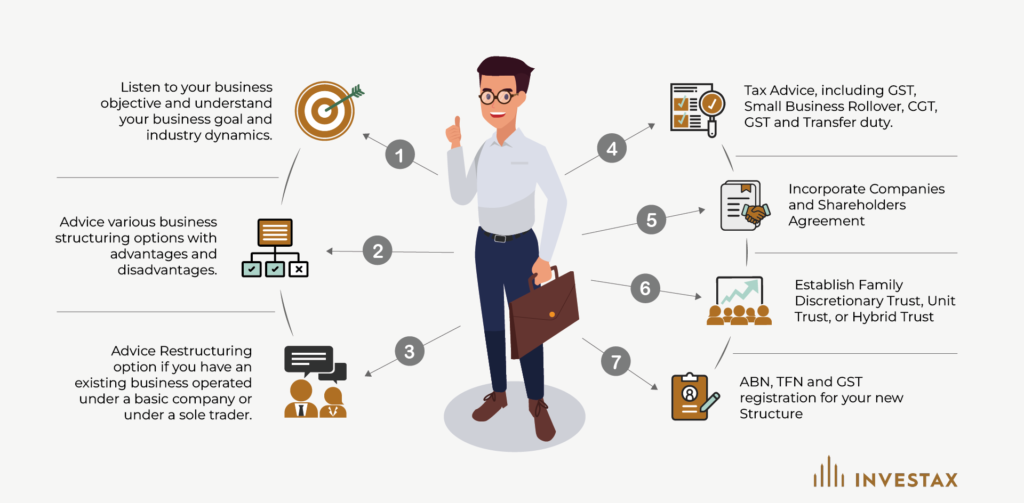
At Investax, we understand the importance of strategic business structuring, and we are here to guide you through the process. By carefully examining your business goals, industry landscape, and legal requirements, we help you lay a solid foundation for your venture. Don’t underestimate the impact of a well-designed business structure—it can optimize your operations, protect your assets, streamline your financials, and position your business for sustained growth.

Business Structure Services in Sydney
Choosing the right business structure is one of the most important decisions a business owner can make. The structure selected at the beginning, or reviewed during business growth, can affect tax obligations, asset protection, legal liability, profit distribution, funding opportunities, succession planning and future sale outcomes.
At Investax, we provide specialist business structure services in Sydney for start-ups, small businesses, family businesses, professional practices, property-related businesses and growing companies. Our team helps business owners understand the advantages and limitations of different structures so they can make informed decisions that support both current needs and long-term goals.
A business structure should not be selected based on simplicity alone. While a sole trader structure may be easy to start, it may not provide the same asset protection, tax planning flexibility or growth potential as a company or trust. Similarly, a company may provide a more formal structure, but it also comes with additional compliance responsibilities. The right structure depends on the business model, ownership plan, risk profile, income level, growth strategy and future exit plan.
Investax helps Sydney business owners review their options clearly and practically. Whether the goal is to launch a new business, restructure an existing operation, protect personal assets, bring in investors, reduce tax risk or prepare for future sale, our advisers provide tailored guidance based on the client’s financial and commercial position.
Why Business Structure Matters
A business structure affects almost every part of a business. It determines how income is taxed, how profits are distributed, who controls the business, how liabilities are managed and how easily the business can grow or change ownership.
Many business owners start with a simple structure because it is quick and affordable. However, as the business grows, that structure may no longer be suitable. Revenue may increase, risks may become larger, employees may be hired, partners may join, investors may become interested or the owner may begin planning for sale. In these situations, the business structure should be reviewed.
Professional business structure advice can help with:
- Choosing the right structure before starting a business
- Reviewing whether an existing structure remains suitable
- Improving tax efficiency where legally available
- Protecting personal and business assets
- Managing legal and commercial risk
- Supporting business growth and expansion
- Preparing for investors or finance
- Planning for succession or business sale
- Separating business and personal wealth
- Reducing future restructuring costs
A business structure should support the business, not restrict it. Investax helps clients choose and review structures with tax, compliance, asset protection and commercial strategy in mind.
Our Business Structure Services in Sydney
Investax provides comprehensive business structure advice for Sydney business owners at different stages of their journey. Our services are designed to support start-up setup, business growth, restructuring, tax planning and long-term wealth protection.
Our business structure services include:
- Business structure selection
- Sole trader, partnership, company and trust comparison
- Business restructuring advice
- Company setup guidance
- Trust structure guidance
- Family business structuring
- Asset protection planning
- Tax-efficient business structuring
- Business ownership and profit distribution review
- Investor and funding structure advice
- Succession and exit planning
- Ongoing structure review
- Compliance and tax reporting considerations
Every business is different. A consultant may need a simple structure at first. A family business may need a structure that supports asset protection and succession. A fast-growing company may need a structure suitable for investors. A property-related business may need careful tax and risk planning. Investax provides tailored advice based on the business owner’s goals, risk level and financial position.
Sole Trader Structure
A sole trader structure is one of the simplest ways to operate a business. It is commonly used by freelancers, consultants, tradespeople and small service providers who want a simple and low-cost setup.
The main advantage of a sole trader structure is simplicity. The owner controls the business, reports business income through an individual tax return and usually has fewer compliance requirements than a company or trust.
However, a sole trader structure also has limitations. The owner is personally responsible for business debts and liabilities. This means personal assets may be exposed if the business faces legal claims, unpaid debts or financial difficulty. Tax planning flexibility may also be limited because business income is generally taxed in the individual’s name.
A sole trader structure may be suitable for a low-risk business in the early stage. However, as income, risk or business complexity increases, it may be worth reviewing whether a company or trust structure would be more appropriate.
Partnership Structure
A partnership structure is often used when two or more people operate a business together. It may be suitable for small professional firms, family businesses or joint ventures where business owners want a relatively simple structure.
Partnerships can be easier to establish than companies, but they require clear agreements between partners. Partners need to understand how profits, losses, responsibilities, decision-making and exit arrangements will be managed.
A key risk of a partnership is shared liability. Partners may be responsible for business debts and obligations, including actions taken by other partners. This can create risk if roles, authority and financial responsibilities are not clearly documented.
Investax helps business owners review whether a partnership structure is suitable and whether a more formal structure may better support growth, asset protection or future succession.
Company Structure
A company is a separate legal entity from its owners. It can own assets, enter contracts, employ staff and operate the business in its own name. A company structure is commonly used by growing businesses, professional firms, trading businesses and enterprises that require a more formal structure.
A company structure may provide stronger asset protection than operating as a sole trader or partnership because the company is legally separate from shareholders. It may also support business credibility, investor readiness and future growth.
However, companies also involve additional compliance responsibilities. Directors must understand their obligations, company records must be maintained and tax reporting must be completed correctly. Issues such as director loans, dividends, retained profits and shareholder arrangements must also be managed carefully.
Investax helps business owners assess whether a company structure is suitable and how it may affect tax, liability, governance and future planning.
Trust Structure
A trust structure may be used for business, investment or asset protection purposes. Trusts are often considered by family businesses, high-income business owners, property-related businesses and clients who want more flexibility in income distribution and asset protection planning.
A trust can be useful in the right circumstances, but it must be established and managed carefully. Trust deeds, trustee responsibilities, beneficiary arrangements, distributions and compliance obligations all need proper attention.
Trusts are not suitable for every business. They can be more complex than sole trader or company structures and may involve higher setup and administration costs. However, when used properly, a trust may support tax planning, family wealth management and asset protection objectives.
Investax helps clients understand whether a trust structure is appropriate and how it may fit into the broader business and financial plan.
Choosing the Right Business Structure
There is no single best business structure for every business. The right structure depends on the owner’s personal circumstances, business activity, risk level, expected profit, industry, funding needs and long-term goals.
Key factors to consider include:
- Number of business owners
- Personal financial position of the owners
- Expected income and profitability
- Business risk and liability exposure
- Asset protection needs
- Tax planning opportunities
- Growth and expansion plans
- Investor or finance requirements
- Succession and exit planning
- Administrative and compliance costs
- Family or related-party considerations
A structure that works well today may not be suitable in three years. That is why business structure should be reviewed as the business grows and circumstances change.
Business Structure for Start-Ups
Start-ups need a structure that supports launch, compliance and future growth. Many new business owners begin as sole traders because it is simple, but this may not always be the best long-term option.
A start-up planning to hire staff, raise capital, bring in partners, develop intellectual property or expand quickly may need a more formal structure from the beginning. Choosing the wrong structure early can create tax, legal and commercial issues later.
Investax helps entrepreneurs and new business owners choose a structure that aligns with their business model and growth plan. For more detailed start-up support, our startup business tax services in Sydney can assist with tax registration, bookkeeping setup, GST, BAS, payroll and early-stage tax planning.
Business Structure for Growing Businesses
As a business grows, its structure may need to change. Increased revenue, employees, contracts, assets, debt or commercial risk can make the original structure less suitable.
A growing business may need to consider moving from sole trader to company, restructuring from partnership to company, introducing a trust, creating a group structure or separating business assets from operating risks.
Investax helps business owners review the structure before growth creates problems. A proactive review can help reduce future tax costs, protect assets and create a stronger foundation for expansion.
Tax Efficiency and Business Structure
Tax is an important factor when choosing a business structure, but it should not be the only factor. The right structure should balance tax efficiency with legal protection, compliance, flexibility and commercial needs.
Different structures are taxed differently. A sole trader reports business income through an individual tax return. A company pays tax on company profits. A trust may distribute income to beneficiaries according to the trust deed and tax rules. A partnership allocates income between partners.
Investax helps clients understand how each structure may affect tax outcomes. We also consider issues such as income distribution, retained profits, capital gains tax, GST, PAYG withholding, director payments and future sale planning.
The goal is to create a structure that is tax-effective, compliant and commercially appropriate.
Asset Protection and Risk Management
Asset protection is one of the main reasons business owners seek structure advice. Business risks may include debts, contracts, employees, customer claims, supplier disputes, professional liability, leases or financial pressure.
A poorly structured business can expose personal assets to commercial risk. A better structure may help separate business risk from personal wealth, depending on the circumstances.
Investax helps clients assess liability exposure and consider structures that may support asset protection. This may include companies, trusts, separate asset-holding entities or revised ownership arrangements.
For clients needing more specific wealth protection guidance, our asset protection services can support broader planning around business risk, personal assets and long-term wealth security.
Business Structure and Funding
A business structure can affect access to funding. Lenders, investors and partners often prefer clear ownership, strong governance and reliable financial reporting. A simple sole trader or informal partnership may not be suitable when a business is seeking external investment.
A company structure may be more appropriate for businesses planning to issue shares, bring in investors or scale operations. Trust or group structures may also be relevant depending on the business model and ownership goals.
Investax helps business owners consider funding requirements before choosing or changing a structure. A structure should support growth rather than create unnecessary barriers.
Business Structure and Succession Planning
Succession planning is important for family businesses, professional practices and long-term business owners. A business structure should make it easier to transfer ownership, bring in new owners, sell the business or pass wealth to the next generation.
Without proper structure planning, succession can become complicated. Tax issues, ownership disputes, unclear control arrangements and poor documentation can create problems when a business owner wants to exit or retire.
Investax helps clients consider succession planning as part of business structure advice. This may include ownership review, trust planning, company share arrangements, family succession, sale preparation and tax implications.
Business Structure and Exit Planning
Many business owners eventually want to sell their business, transfer it to family or step back from daily operations. The structure used during the life of the business can affect the tax and commercial outcome at exit.
A business sale may involve capital gains tax, goodwill, business assets, shares, units or trading stock. The structure may also affect whether certain concessions or planning opportunities are available.
Investax helps business owners review exit planning early. This allows time to prepare the structure, records, financial statements and ownership arrangements before a sale or transition.
Restructuring an Existing Business
Business restructuring may be required when the current structure is no longer suitable. This may happen when the business grows, takes on more risk, changes ownership, expands into new markets or prepares for investment.
Restructuring may involve moving from sole trader to company, changing from partnership to company, introducing a trust, separating assets, creating a group structure or reviewing shareholder arrangements.
Restructuring should be handled carefully because it may trigger tax, duty, legal and compliance issues. Investax helps clients assess the benefits and risks before making changes.
Business Structure for Family Businesses
Family businesses often need structures that support tax planning, control, income distribution, asset protection and succession. Family members may have different roles, ownership interests and long-term expectations.
Investax helps family businesses review structure options and plan for future transitions. This may include company structures, discretionary trusts, family agreements, succession planning and tax reporting.
A good family business structure should reduce confusion and support long-term stability.
Business Structure for Professional Practices
Professional practices such as medical, legal, consulting, accounting, engineering and advisory businesses often have specific structuring needs. These may involve professional risk, partner arrangements, service entities, income distribution, asset protection and succession planning.
Investax helps professional practice owners review structure options that support commercial goals and compliance requirements. A professional practice structure should be practical, defensible and suitable for the industry.
Business Structure for Property-Related Businesses
Property investors, developers and real estate-related businesses often need careful structure planning. Property activities may involve GST, CGT, land tax, income tax, financing, asset protection and development risk.
The right structure may depend on whether the property is being held for long-term investment, developed for sale, leased commercially or used in a business.
Investax helps property-related businesses and investors consider structure from both a tax and commercial perspective.
Common Business Structure Mistakes
Many business structure problems begin with decisions made too quickly or without professional advice. These mistakes can become expensive to fix later.
Common mistakes include:
- Choosing a structure based only on low setup cost
- Operating as a sole trader despite high business risk
- Mixing personal and business assets
- Not documenting partnership arrangements
- Using a company without understanding director obligations
- Setting up a trust without proper administration
- Ignoring asset protection needs
- Not reviewing structure as revenue increases
- Bringing in partners without clear ownership agreements
- Failing to plan for succession or sale
- Restructuring without considering tax consequences
Investax helps business owners avoid these issues through careful review and practical advice.
Our Step-by-Step Business Structure Process
Step 1: Understanding the Business
We begin by understanding the business model, industry, ownership, income expectations, risk level, current structure and future goals.
Step 2: Reviewing Current and Future Needs
We review tax, asset protection, funding, growth, succession and exit planning needs. This helps identify whether the current structure is suitable.
Step 3: Comparing Structure Options
We compare relevant structure options, including sole trader, partnership, company and trust arrangements. We explain the benefits, limitations and compliance requirements of each.
Step 4: Recommending a Suitable Structure
Based on the client’s goals and circumstances, we recommend a structure that supports tax efficiency, asset protection and business growth.
Step 5: Implementation Support
We assist with the practical steps required to implement the structure, including coordination with legal advisers where needed, registrations, accounting setup and tax planning.
Step 6: Ongoing Review
A business structure should be reviewed regularly. We provide ongoing support as the business grows, changes ownership, expands or prepares for sale.
Why Choose Investax for Business Structure Services in Sydney?
Investax provides business structure advice with a focus on tax strategy, asset protection and long-term business success. We understand that structure decisions affect more than compliance. They influence profitability, risk, growth and future wealth creation.
Clients choose Investax because we provide:
- Specialist business structure advice for Sydney business owners
- Support for sole traders, companies, trusts and partnerships
- Tax-efficient structure planning aligned with business goals
- Asset protection and risk management guidance
- Start-up and growth-stage structure support
- Succession and exit planning advice
- Clear explanations without unnecessary complexity
- Ongoing review as the business evolves
For broader international tax and business policy insights, the OECD tax policy centre provides useful global tax resources. For broader small business and enterprise development information, the World Bank SME Finance resource may also be useful.
Speak with a Business Structure Adviser in Sydney
A business structure should support the owner’s goals, protect against unnecessary risk and provide flexibility for future growth. Whether the business is just starting, expanding, restructuring or preparing for sale, professional structure advice can help avoid costly mistakes and create a stronger foundation.
Investax helps Sydney business owners choose, review and improve business structures with practical tax and commercial advice. Our team provides support for sole traders, partnerships, companies, trusts, family businesses, professional practices and growing enterprises.
Contact Investax today to speak with a business structure adviser in Sydney and receive tailored guidance for building a tax-effective, protected and future-ready business.
How do I choose the right business structure in Australia?
What is the most common business structure in Australia?
What are the tax implications of different business structures in Australia?
Can I have more than one business structure for different parts of my business?
Why should I use a company or a trust structure for my business over a sole trader or partnership structure?
What and Who is a Settlor?